
Transforming Agriculture to Uplift Rural Communities across Ethiopia
Ethiopia’s 15 million smallholder farmers are the custodians of its land and food system — yet they remain underserved, with limited access to modern tools, services, and stable markets. In a country where over 70% of people depend on agriculture, unlocking rural potential is not just a development goal — it is a national imperative.


Bridging What’s Broken
Ethiopia is not short on agricultural potential. The resources exist — funding, tools, training, infrastructure, and data — but the delivery architecture does not.
Today, the system is incredibly disjointed:
Inputs are fragmented across multiple players.
Farmers are unsupported, operating alone.
Institutions and capital struggle to coordinate at ground level.
This isn’t a problem of scarcity — it’s a problem of system design.
The Farmhub model introduces the missing architecture.
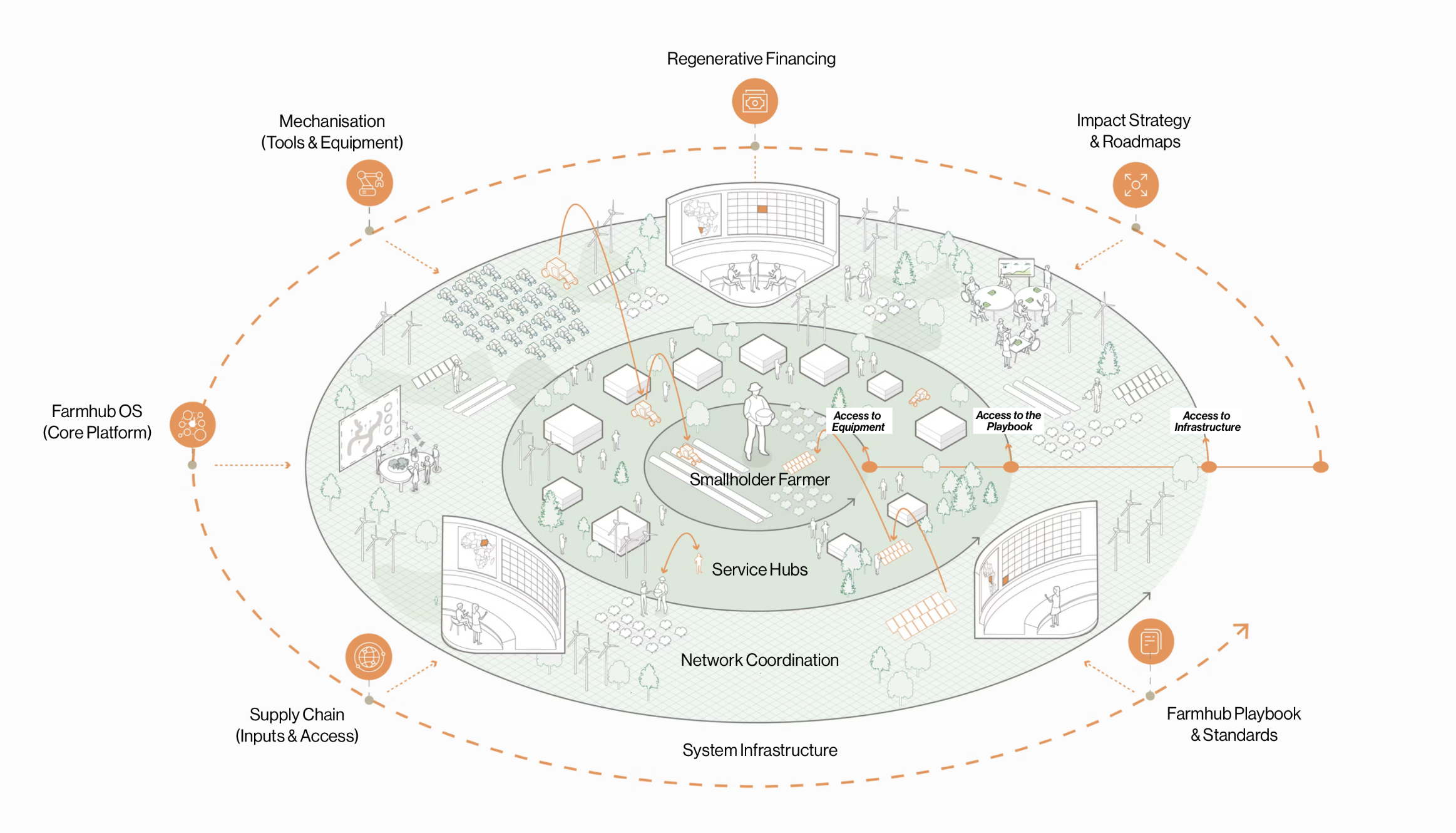
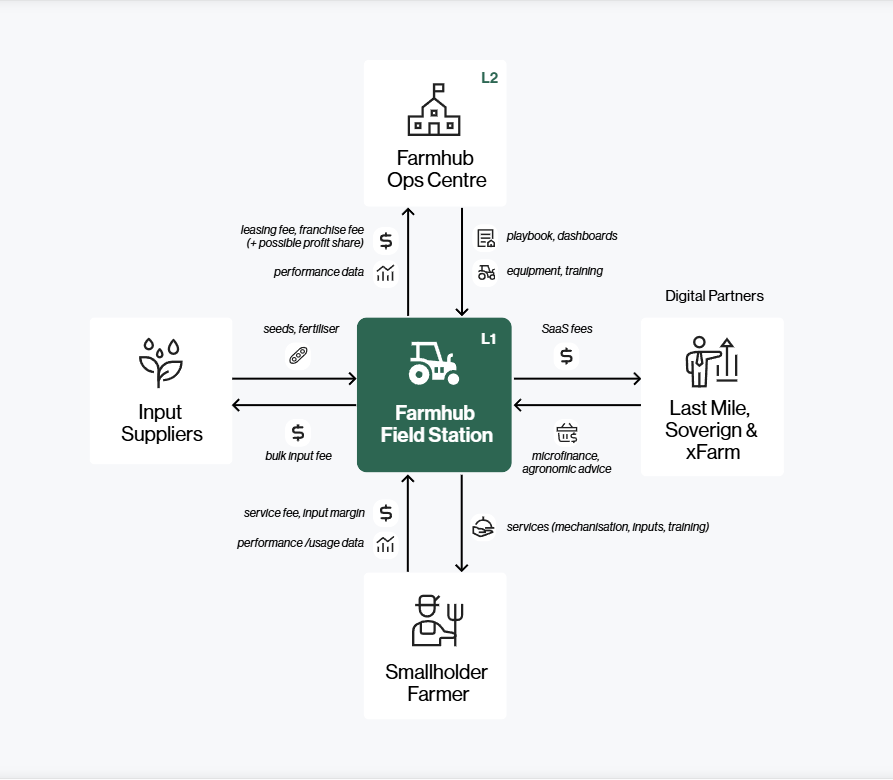
By connecting upstream resources with last-mile farming communities through an integrated three-layer system — infrastructure, coordination, and service delivery — Farmhub transforms fragmentation into flow. It stitches together what’s siloed, creating a clear, scalable pathway for value to move efficiently from funders and enablers to the field — and back.
This is not just a delivery system, it’s a new connective tissue for agricultural transformation at scale.
To unlock Ethiopia's enormous potential we need a new System Vision & Implementation Plan
Vision, Mission & Approach
Vision: In 2040 - Ethiopia is Africa's model for food sovereignty & economic prosperity based on regenerative agriculture and ecological agri-food systems.
Mission: To pioneer an integrated, repeatable business model for agri-food ecosystem transformation that has been scaled to 1,500 Farmhubs servicing over 2,300,000 hectares of smallholder farms across Ethiopia.
Approach: By leveraging education, technology transfer, innovation, and community development. We take a systems-led approach to transforming the agri-food system, initially focusing on empowering rural communities in the Amhara, Oromia, Sidama and Tigray regions of Ethiopia.
The Farmhub Model
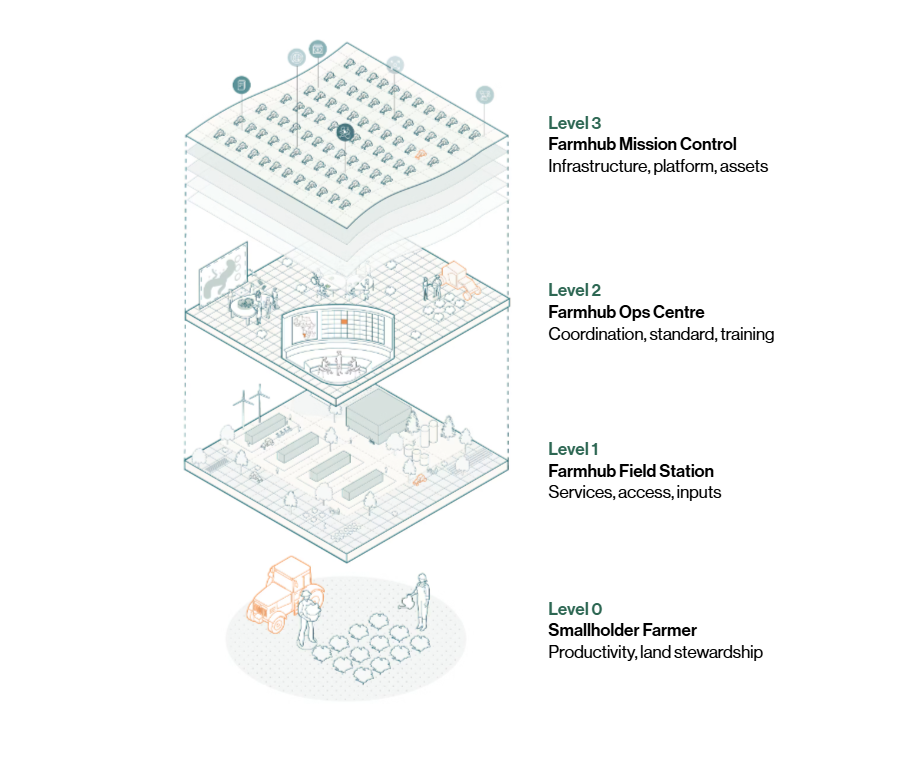
To build this ecosystem, we’ve defined three foundational components of a new integrated model we call the Farmhub Model:
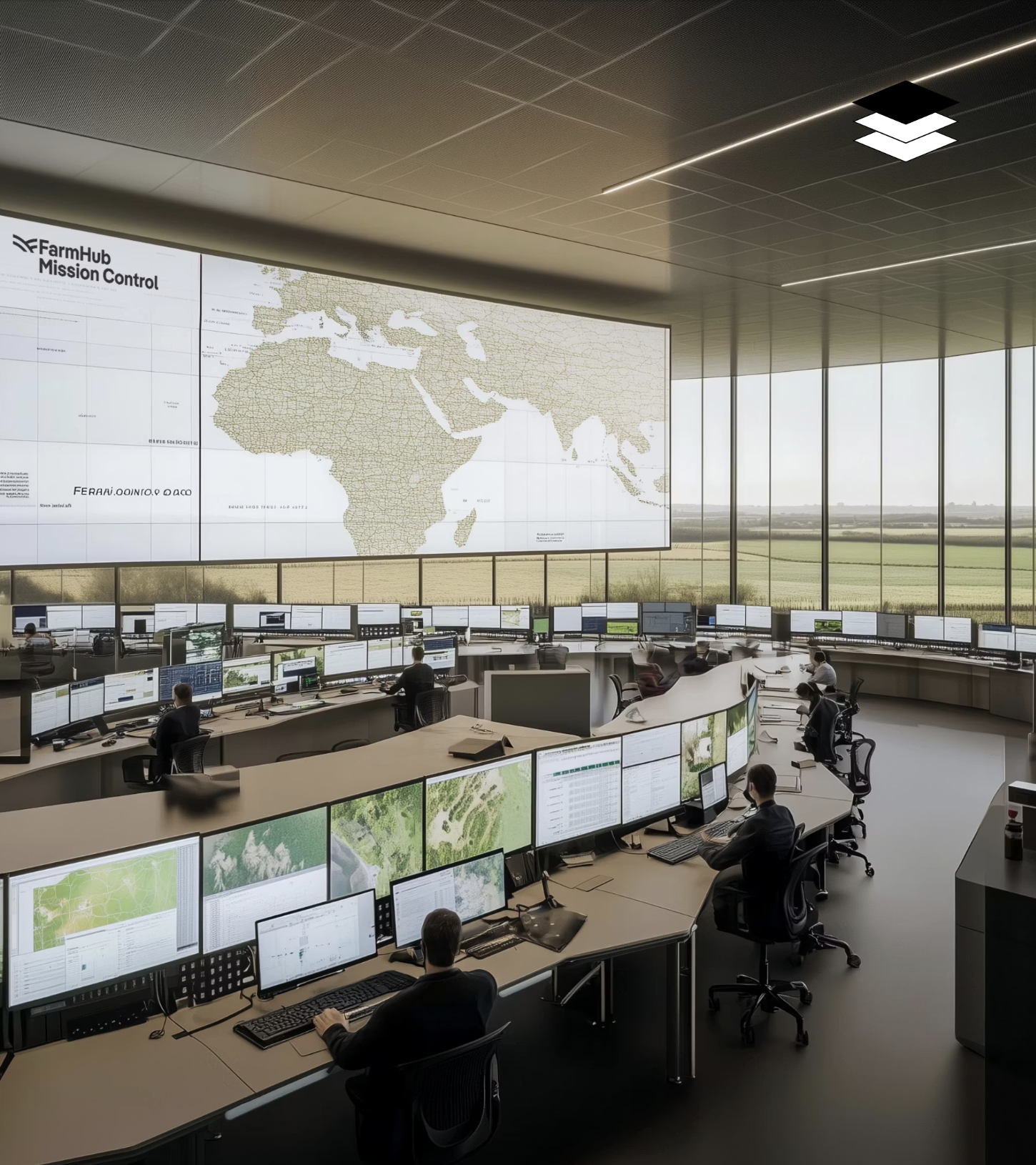
Level 3: The Farmhub Mission Control
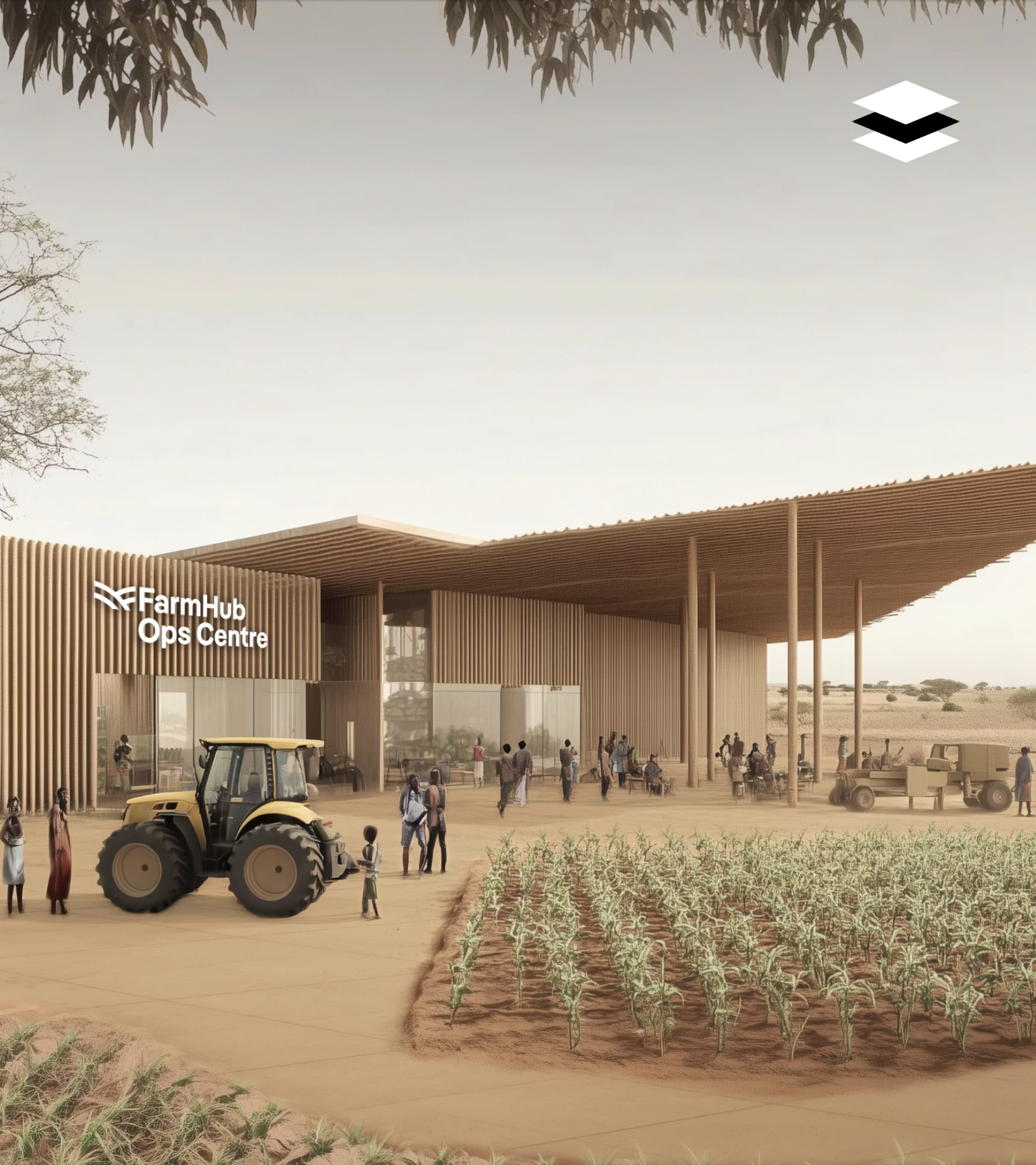
Level 2: The Farmhub Ops Centre
Level 1: The Farmhub Field Station
The following section walks through what each of these components are, what role they play in the broader system, and how each of them reinforces the other in terms of generating systemic change.
The deeper social and ecological impact required is not possible without each of these critical enabling layers.
Level 1: Farmhub Field Station
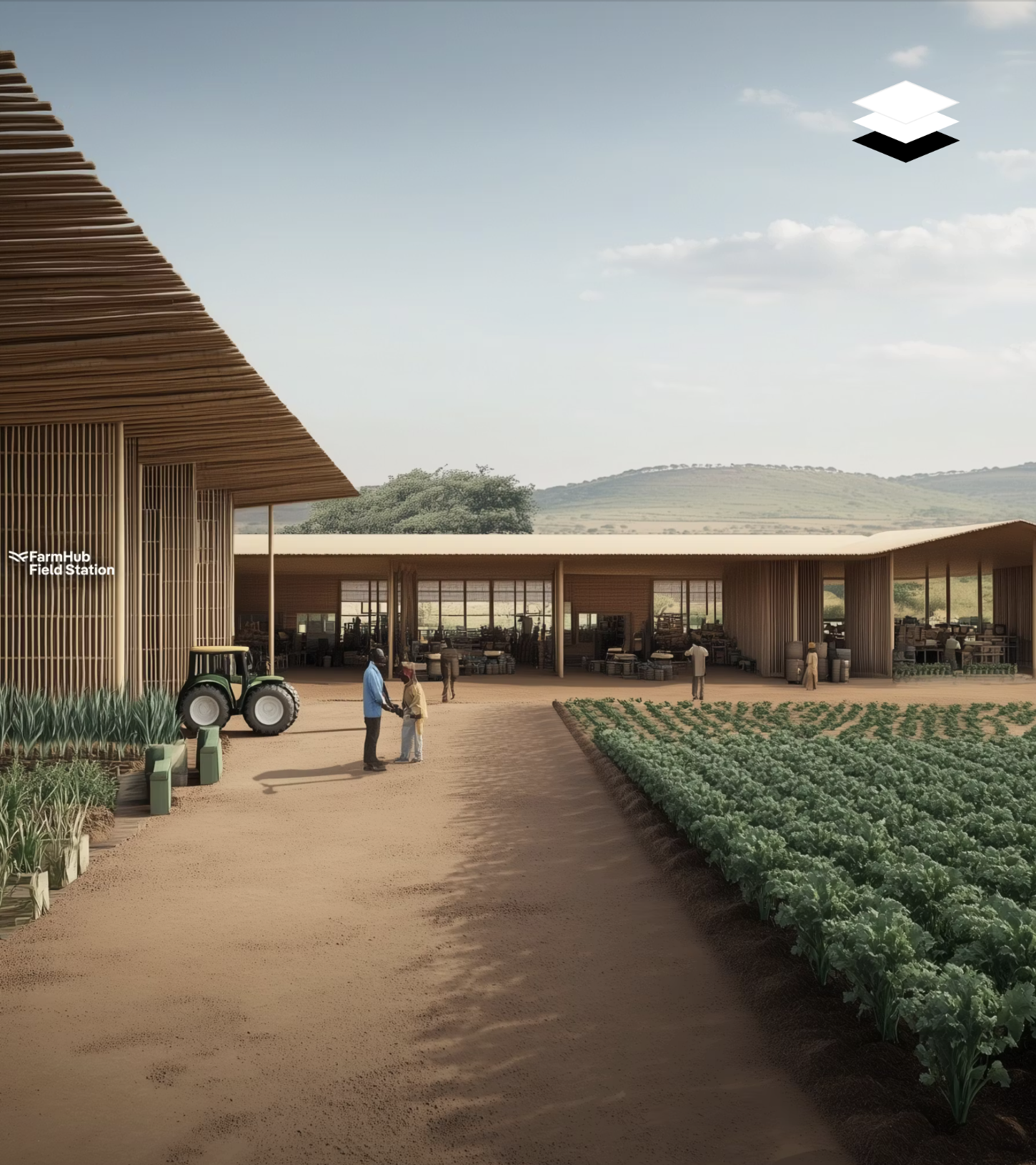
A Farmhub Field Station is a local service hub that provides smallholder farmers with access to the core infrastructure they need to close the yield, income, and market gap.
Each hub is a physical location — locally operated & offering affordable, standardised access to:
Mechanisation-as-a-service (e.g. tractor hire)
Input provisioning (seed, fertiliser, tools)
On-site storage and aggregation
Soil testing and basic diagnostics
Digital solutions for farm, fleet, supply chain and operations management
Farmer training, advisory, and data collection
Value addition
Logistics coordination and output pickup
The Farmhub is the rural service hub for smallholder agriculture — like a franchise field station that delivers yield, tools, and trust.
Level 2: Farmhub Ops Centre
Farmhub Ops Centre is the entity that oversees, enables, and standardises a network of Farmhub Field Stations across a region or country.
It leverages our Farmhub Playbook and acts as the coordination layer for the overall Farmhub model in a specific region — providing:
Standardised operating protocols and training
Technical support and compliance
Logistics coordination and equipment allocation
Regional marketing, partnerships, and contracts
Performance monitoring and shared analytics
Policy and ecosystem engagement at national level
It’s the operating layer that makes a scalable, coordinated, and financially viable Farmhub ecosystem possible.
Level 3: Farmhub Mission Control
Farmhub Mission Control is the platform and backbone of the Farmhub system. It owns and manages the shared, high-cost, high-risk assets and protocols required to scale the ecosystem.
It does not operate Farmhubs — it enables others to operate, replicate, and trust them. It provides:
Capital-intensive assets (equipment, tech, facilities) via a PAYG based model
The Farmhub OS digital platform (Ops dashboards, playbooks, compliance layer)
Governance and trust infrastructure (legal wrappers, audits)
Performance data, financial visibility, fund flows, and investment structuring
Think of it as the infrastructure grid, software stack, and financial rail combined — built to serve distributed, regenerative, and localised rural economies.
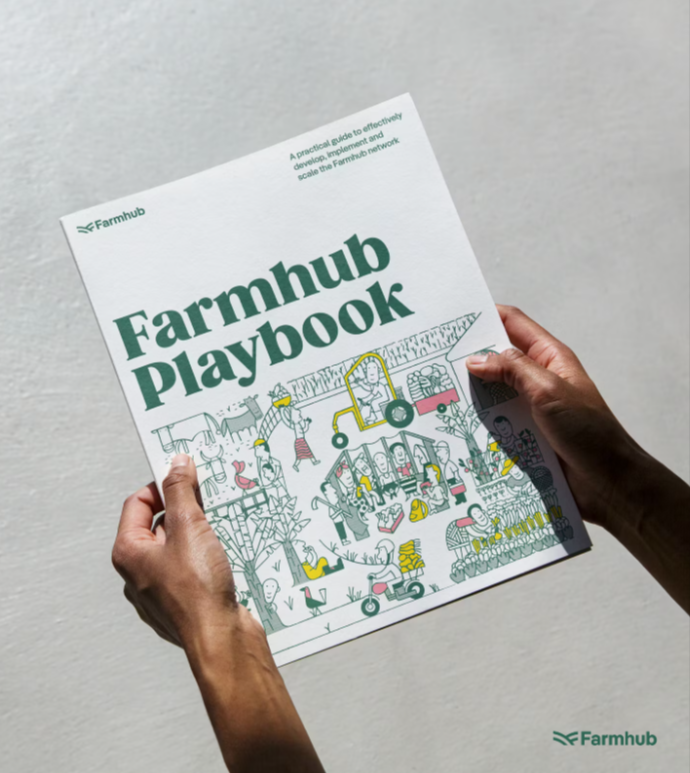
The Farmhub Playbook
At the heart of the Farmhub model is a living, evolving playbook — a practical blueprint that defines how each part of the system works, and how it scales. This isn’t just a manual — it’s the backbone that powers a distributed, high-integrity franchise network.
It standardises how services are delivered to smallholder farmers
It encodes best practices, workflows, compliance protocols, and partner models
And it ensures every Farmhub — whether in Amhara, Oromia, Sidama, or Tigray — can deliver consistent, high-quality outcomes
But the Playbook is more than documentation. It is coupled to the Farmhub OS — our digital platform. This means every update, insight, or adaptation flows straight from field to system… and back again. As the network grows, the Playbook grows with it — enabling continuous improvement, training, and replication at scale. It is how we maintain trust, integrity, and impact — across thousands of hubs and millions of farmers.
One System, Three Roles: How We Structure for Scale
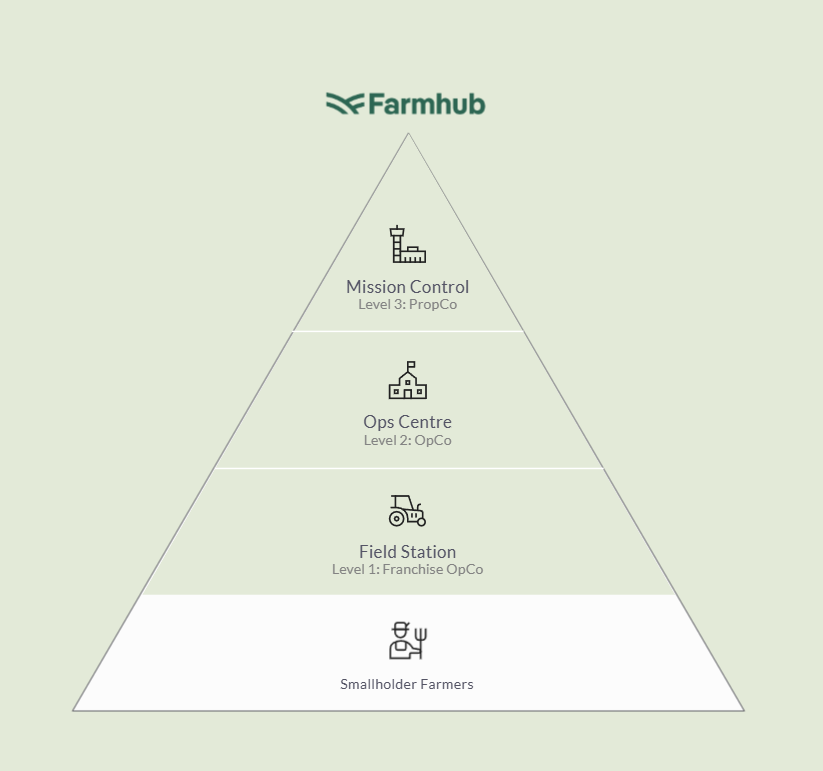
To scale across Ethiopia, we separate the Farmhub model into three distinct roles. Each role is carried out by a different kind of entity:
Level 3: Mission Control — this entity owns and invests in the infrastructure that powers the system (PropCo)
Level 2: Ops Centre — this entity operates and manages the system in each country (OpCo),
Level 1: Field Station — this entity delivers value directly to smallholder farmers on the ground (Franchise OpCo)
This separation of roles lets us protect infrastructure assets while deploying them where they’re most needed, maintaining operational excellence, by letting local partners manage delivery, and scale trust and accountability, by standardising what’s central, and localising what’s contextual.
In short, it lets us build a system that is modular, replicable, investable — and resilient.
Utilising Appropriate-Scale Technology for Regenerative Farming
Farmhub adapts proven appropriate-scale mechanisation models from Asia to support smallholder farmers in Ethiopia, focusing on equipment and service models designed for 1–5 hectare farms common in both regions. These technologies are selected to boost productivity while enabling regenerative, climate-smart farming practices.
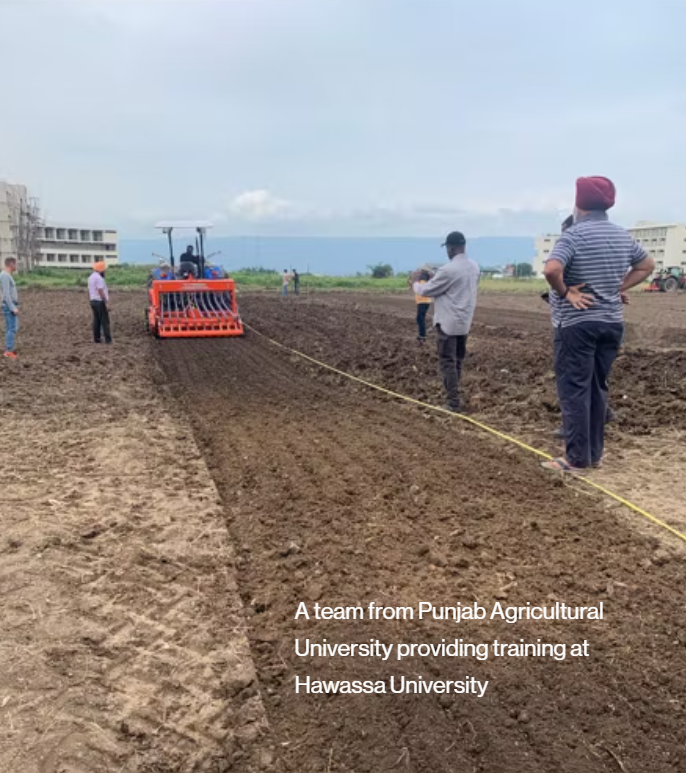
Through a custom hiring service, Farmhub provides access to right-sized technologies such as 50hp tractors & precision seeders — lowering barriers to entry without requiring ownership. Precision operations support reduced tillage, efficient input use, improved soil structure, and better water management.
All technologies are adapted to local conditions, including Ethiopian soils, cropping systems (teff, wheat, maize, sorghum), labour patterns, and infrastructure constraints. This ensures productivity gains go hand in hand with long-term soil health and resilience.
Farmhub partners with Indian equipment manufacturers and Punjab Agricultural University to combine proven hardware with digital solutions, regenerative agronomy and farmer training, delivering a scalable, field-tested service model.
Enabling a low cost -franchise operated business model
By deliberately separating capital ownership from service delivery and standardising everything else, Farmhub enables a low-cost, franchise-operated business model.
High-cost items such as buildings, tractors, implements, storage, and digital infrastructure are owned at the system level and leased to local operators on a pay-as-you-go basis, dramatically reducing upfront capital requirements for franchisees.
Local Farmhub Field Stations are therefore asset-light, focused on execution rather than balance-sheet risk, and can reach breakeven quickly by monetising proven service bundles such as mechanisation-as-a-service, input distribution, and post-harvest handling.
Standardised equipment fleets, shared procurement, and a central operating playbook further drive down unit costs, while digital coordination improves utilisation and reduces downtime. The result is a locally owned, professionally run franchise that is affordable to launch, resilient to shocks, and scalable across rural contexts without sacrificing quality or margins.
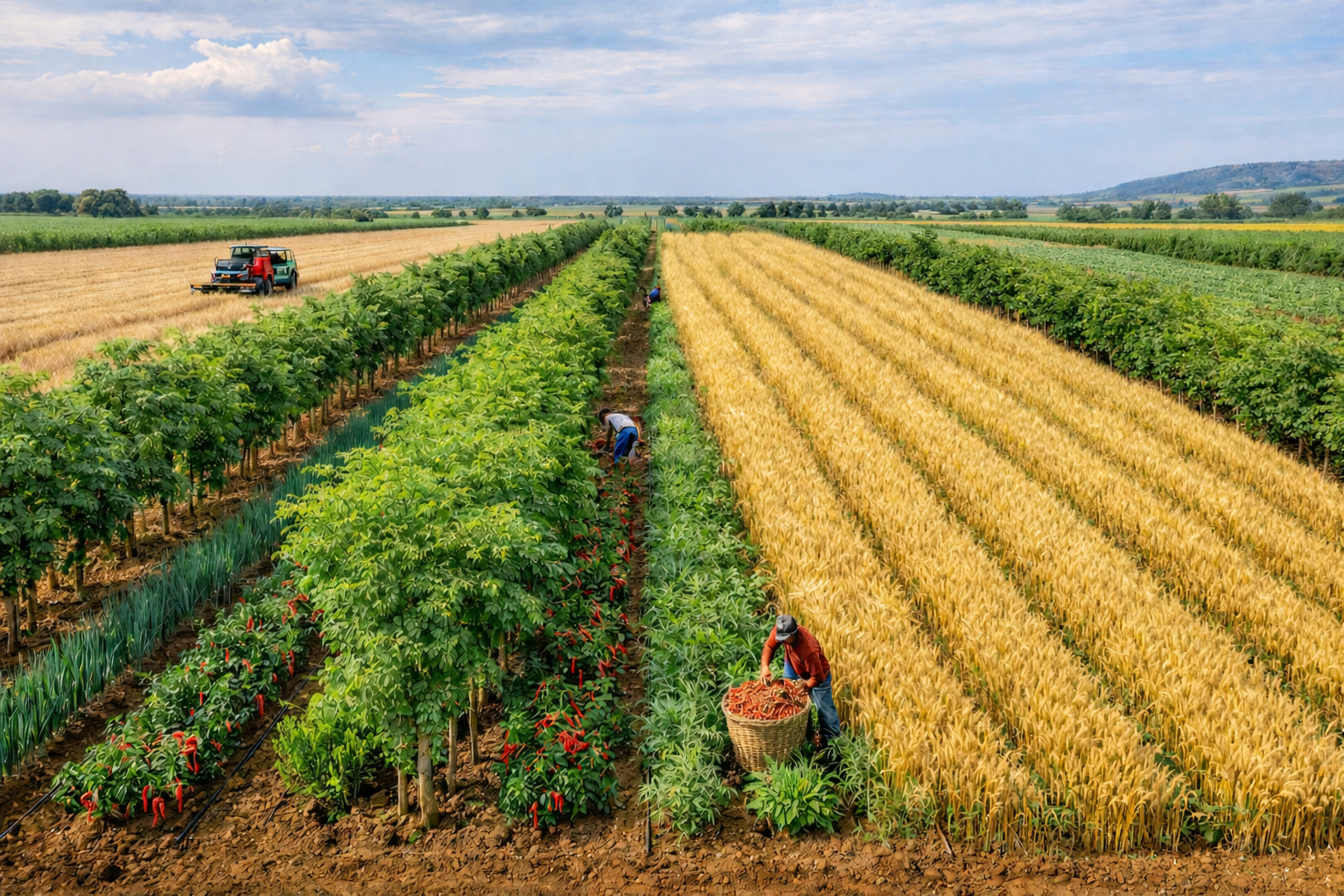
What if Ethiopian farms looked like this in 2040 and 2.3 million of its smallholder farmers produced 20t/ha
We've been building momentum…
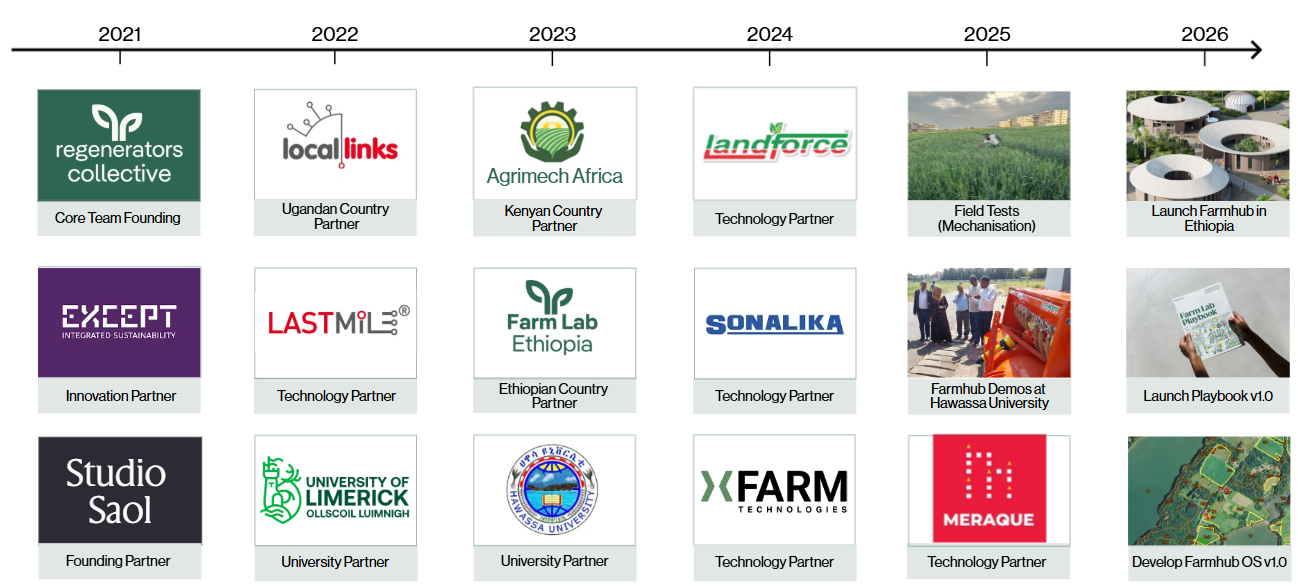
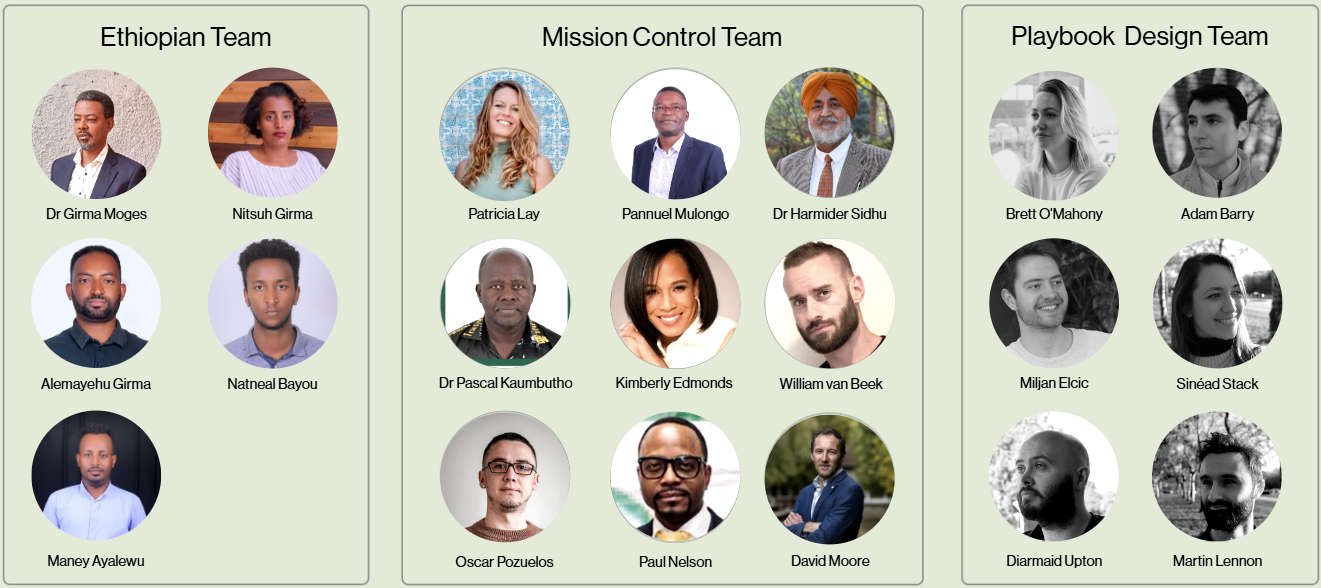
We've built an amazing team…
We've assembled a broad partner network
Partnership with Hawassa University
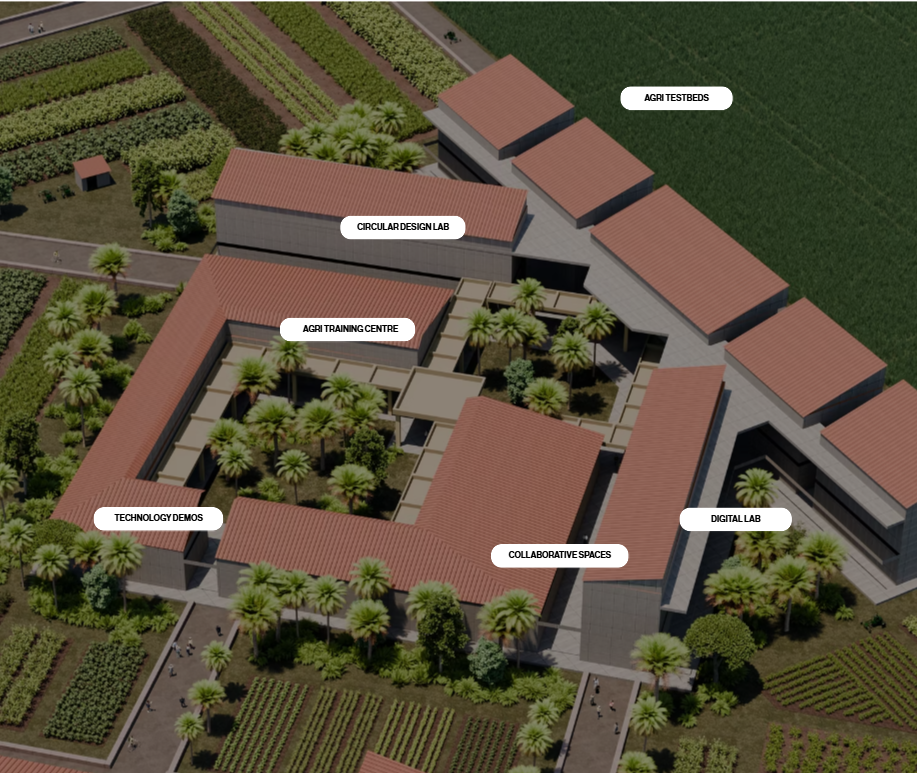
We envision Farmhub Mission Control at Hawassa University as a home for place-based, systems innovation.
Positioned on the Hawassa University Innovation Campus, this state-of-the-art facility will focus on fostering cross-sectoral collaboration and real-time experimentation.
Through its agri-tech testbeds and collaborative spaces, the Mission Control will enable local farmers, researchers, students, and innovators to co-create sustainable solutions, driving systemic change in Ethiopia’s agricultural sector while scaling impacts to the wider African region.
Partnering with the Ethiopian Agricultural Transformation Institute
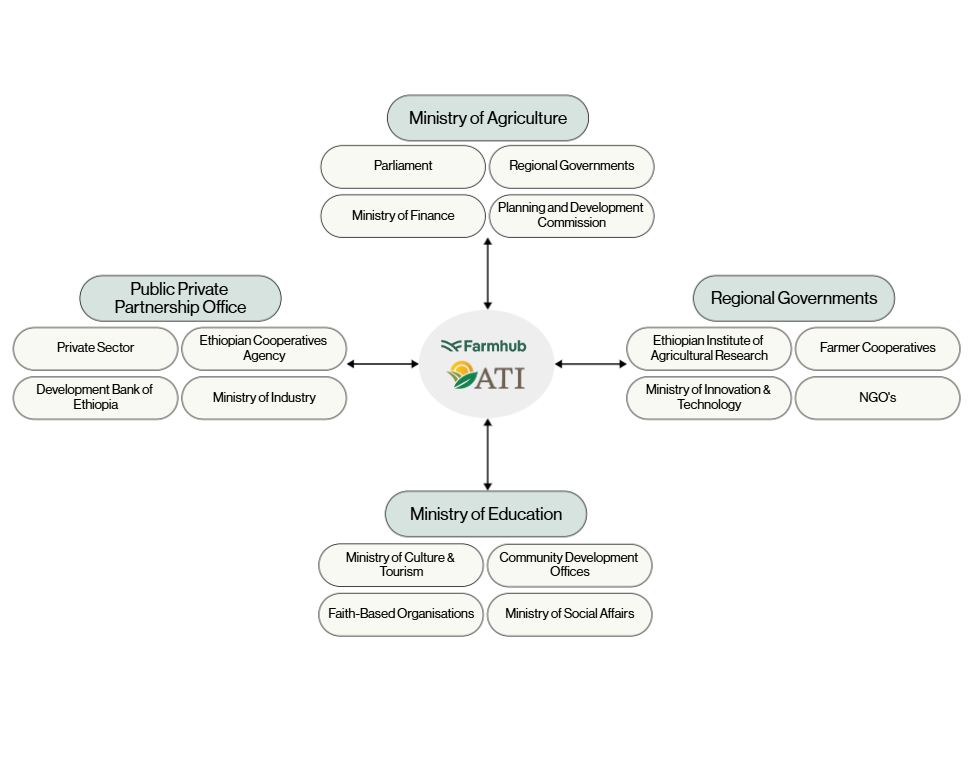
Farmhub is collaborating with the Ethiopian Agricultural Transformation Institute (ATI) to drive a nationally coordinated transformation of smallholder agriculture in Ethiopia, with the shared ambition to scale the Farmhub system to over 1,500 locally owned franchises serving over 2 million hectares within the next 15-20 years.
Achieving this level of impact requires an aligned Public-Private Partnership (PPP) that combines ATI’s policy leadership, national coordination mandate, and public investment levers along with Farmhub’s franchise-based delivery model and operating infrastructure.
Our partnership will convert the current fragmented programmes into a scalable, investable system—enabling rapid replication across regions, mobilising blended finance, and ensuring consistent, measurable improvements in productivity, farmer incomes, and food security at national scale.
Contact Us
The systemic challenges that we are addressing can only be solved through the creation of a symbiotic network of talented, like-minded, and inspired individuals and organisations.
The Farmhub team are seeking partners and investors who share our mission to transform the lives of millions of people in rural Ethiopia.
david.moore@farmhub.earth
